Wood Flooring in Huntington Park, CA

Installation, refinishing and repair of solid and engineered hardwood, from a crew that has worked this housing stock for over twenty years.

Huntington Park Wood Flooring has spent more than twenty years installing, refinishing and repairing wood floors in Huntington Park, CA and across the surrounding southeast Los Angeles County cities. We work on solid hardwood and engineered hardwood, on stairs, on subfloors, and on the repairs that keep an old floor going. Every job starts by establishing what is already on the floor and what is holding it up, because that answer decides everything that follows.

That covers a wide range of buildings. A 1920s bungalow with original narrow strip oak under three layers of carpet is a different job from a 1980s apartment building where four units have to be turned over on a schedule, and both are a different job again from a slab-built house where the question is whether solid wood can go down at all. We quote all three from the same starting point: measurement first, opinion second.

Huntington Park is old housing, and it is mostly rented. Around 41.7% of the housing here predates 1950 and 27.5% of it predates 1939, which is why so many floors in this city are original oak rather than anything bought in the last thirty years. About 75.8% of it is renter-occupied and 51.6% sits in buildings of two or more units, so a large share of the work is for owners and managers rather than for the person living on the floor. Both change how a job is scoped, and we scope them differently.

Get Your Free Quote

Fast response • No obligation

So we can reach you about your request.

So we can send you a confirmation after you submit this inquiry form.

  • Licensed & Insured
  • Free Estimates
  • 20+ Years Experience

What we do

Our Services

Wood flooring for Huntington Park and southeast Los Angeles County

Installer working an edger along the perimeter of a white oak floor in a Huntington Park bungalow, blending the edge into the sanded field.

Wood Floor Refinishing

Sanding, recoating and full refinishing of wood floors in Huntington Park, including original pre-war oak.

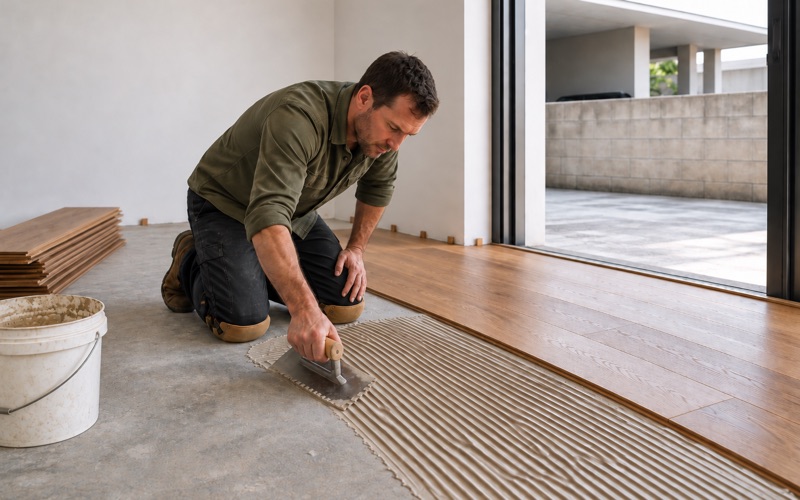
Installer troweling adhesive across a concrete slab before laying engineered oak flooring in a Huntington Park house.

Engineered Hardwood Flooring

Engineered hardwood flooring supplied and installed in Huntington Park, specified for slabs and moisture conditions.

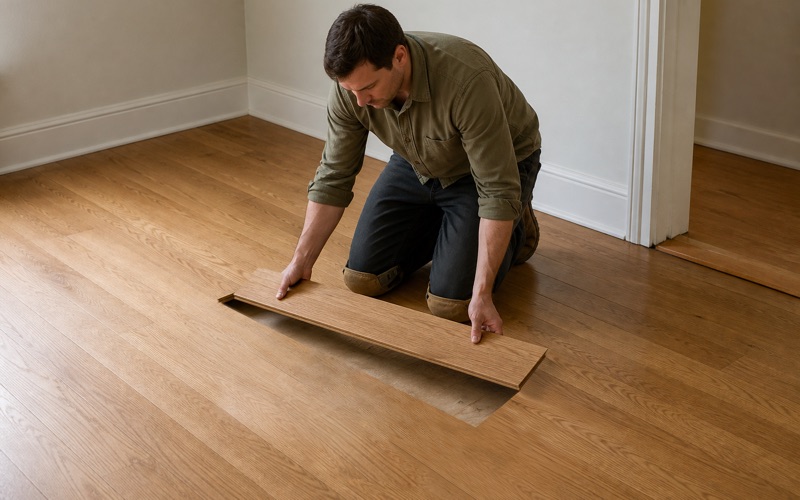
Installer lowering a matched white oak board into a staggered opening cut in an existing Huntington Park floor.

Hardwood Floor Repair

Board replacement, weave-in repair and patching for damaged hardwood floors across Huntington Park.

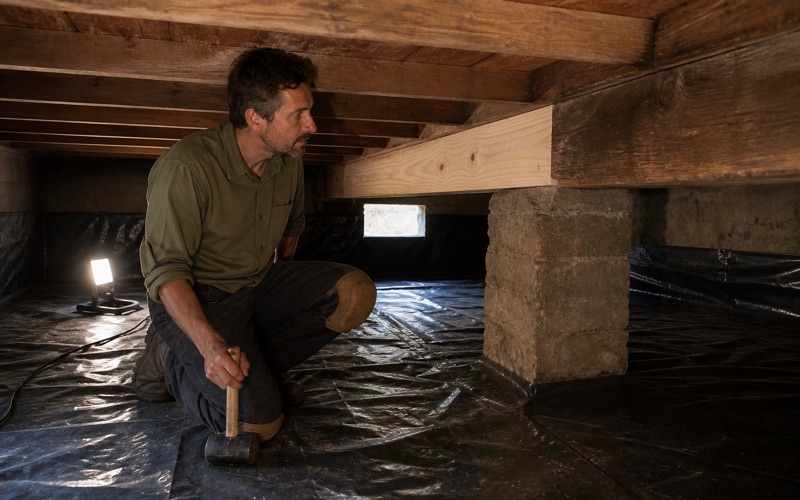
Installer sistering a new joist alongside a damaged one beneath a raised Huntington Park house, working from the crawl space.

Subfloor Repair

Subfloor, joist and crawl space moisture repair beneath wood floors in Huntington Park and nearby cities.

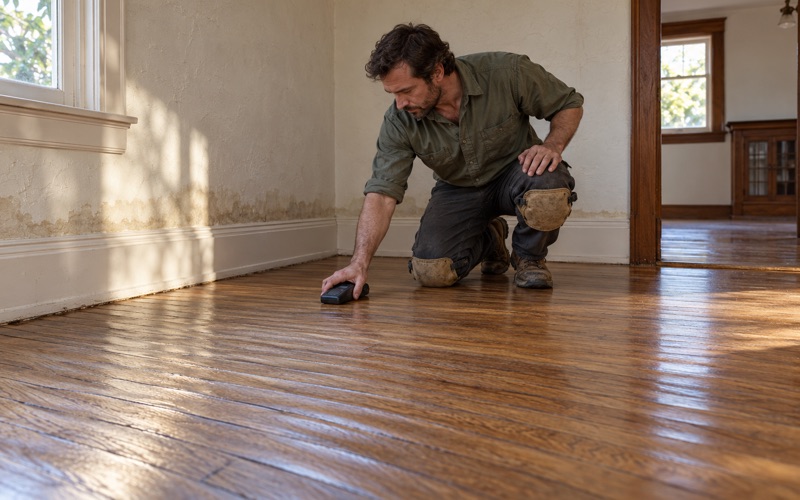
Installer checking a moisture meter against cupped white oak boards near a water-stained wall in a Huntington Park house.

Water Damaged Hardwood Floor Repair

Repair of water damaged hardwood floors in Huntington Park, from moisture mapping and drying through to refinishing.

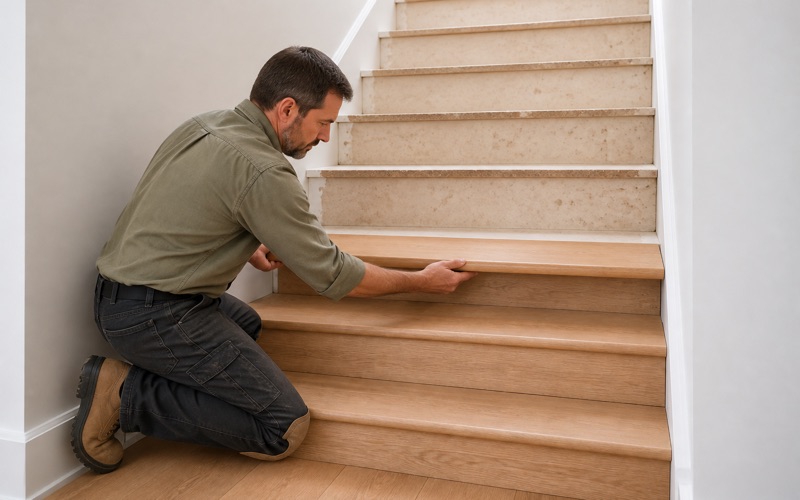
Installer setting a bullnosed white oak retro tread onto a stair in a Huntington Park house, cut to the full width of the flight.

Hardwood Stairs

Hardwood stair treads, risers and nosings installed, retro-fitted and refinished across Huntington Park.

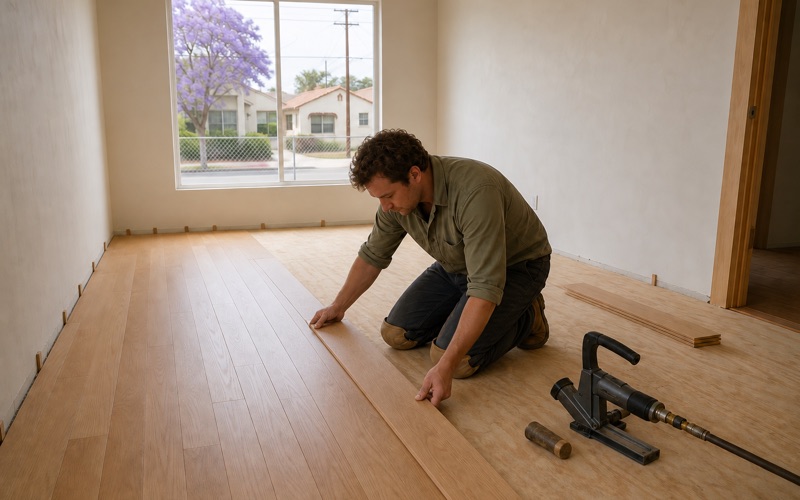
Installer racking solid white oak boards over a plywood subfloor in a Huntington Park house, expansion gap held at the wall.

Solid Hardwood Flooring

Solid hardwood flooring supplied and nail-down installed across Huntington Park and nearby cities.

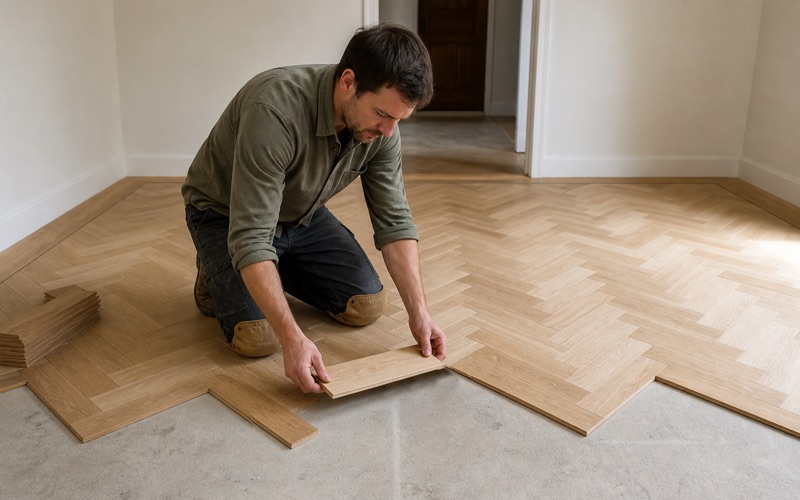
Installer setting a wide white oak plank into a herringbone field in a Huntington Park house, working from a centerline.

Wide Plank Flooring

Wide plank, herringbone and chevron wood floor installation and pattern set-out in Huntington Park.

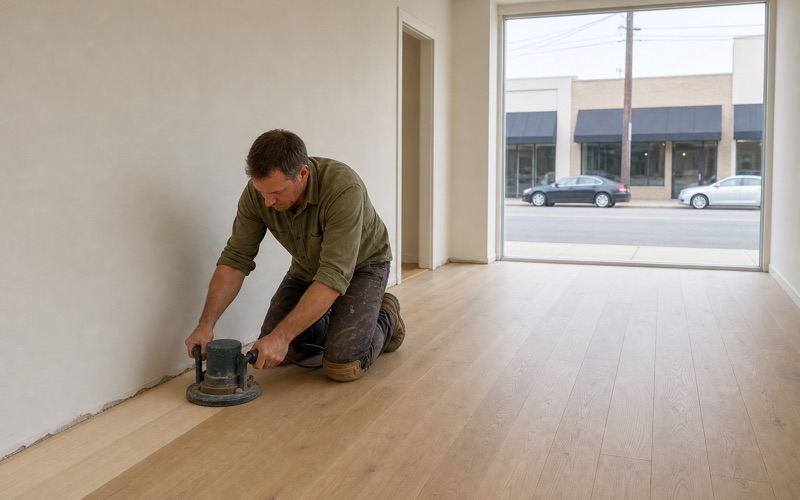
Installer running an edger along the base of a wall in an empty Huntington Park ground-floor retail unit with an oak floor.

Commercial Hardwood Flooring

Hardwood flooring installed, refinished and maintained in commercial premises across Huntington Park.

Twenty Years of Wood Floors in Southeast Los Angeles County

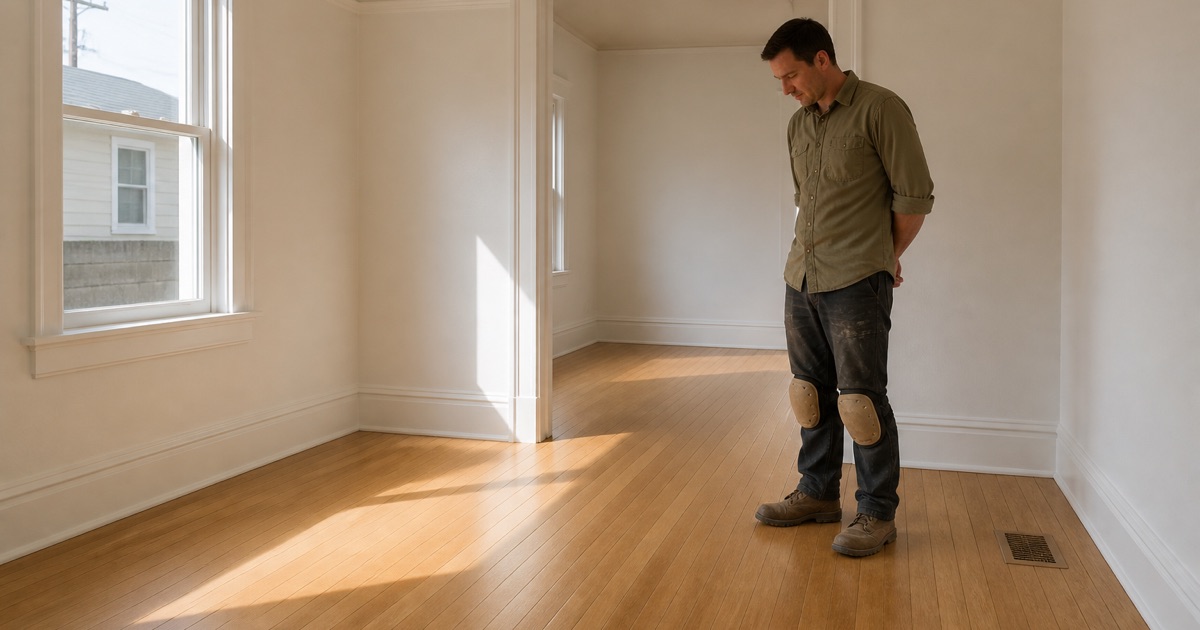
Refinished white oak strip flooring running through a pre-war Huntington Park bungalow, boards passing under tall painted baseboard and a plain threshold at the doorway.

More Than Twenty Years in the Trade

Two decades of working on the same housing stock means the surprises are mostly known ones. We have seen what is under the carpet in a Huntington Park bungalow, what a 1950s tract subfloor is fastened with, and which repairs on an eighty-year-old floor are worth making. That experience shows up as a more accurate quote, not as a slogan.

Why Choose Huntington Park Wood Flooring

Build Era Established First

Every quote begins with the age and construction of the building, because a raised 1930s floor and a 1980s slab accept completely different products. That single question decides whether solid hardwood is even available to you, so you get a specification calibrated to your house rather than a catalog page that assumes a subfloor you do not have.

Slab Moisture Measured, Not Assumed

No wood goes down over concrete until the slab has been tested with in-situ relative humidity probes to the ASTM F2170 method and the reading is written down. Concrete that reads above 75% relative humidity will push moisture into a floor for years, so we hold the job rather than install onto a slab that has not passed.

Lead-Safe on Pre-1978 Housing

Sanding disturbs paint, and the EPA Renovation, Repair and Painting rule covers housing built before 1978. With 41.7% of Huntington Park’s housing predating 1950, most of what we work on falls inside that rule, so lead-safe work practices are the default here rather than an upgrade you have to ask for.

Products are selected against the South Coast air district’s 275 grams per liter limit for wood coatings, not from a national catalog. A finish that is perfectly legal in another state can be unusable in this air basin, so specifying from the local limit avoids a change of product halfway through a job.

Repair Before Replacement

Never do we quote a full replacement on an original floor before establishing what the wear layer can still take. Board-by-board repair and weave-in come first, with species, grade and board width matched to what is already down, so a repair in one room does not read as an obvious patch against the rest of the house.

Original Oak in Pre-War Houses

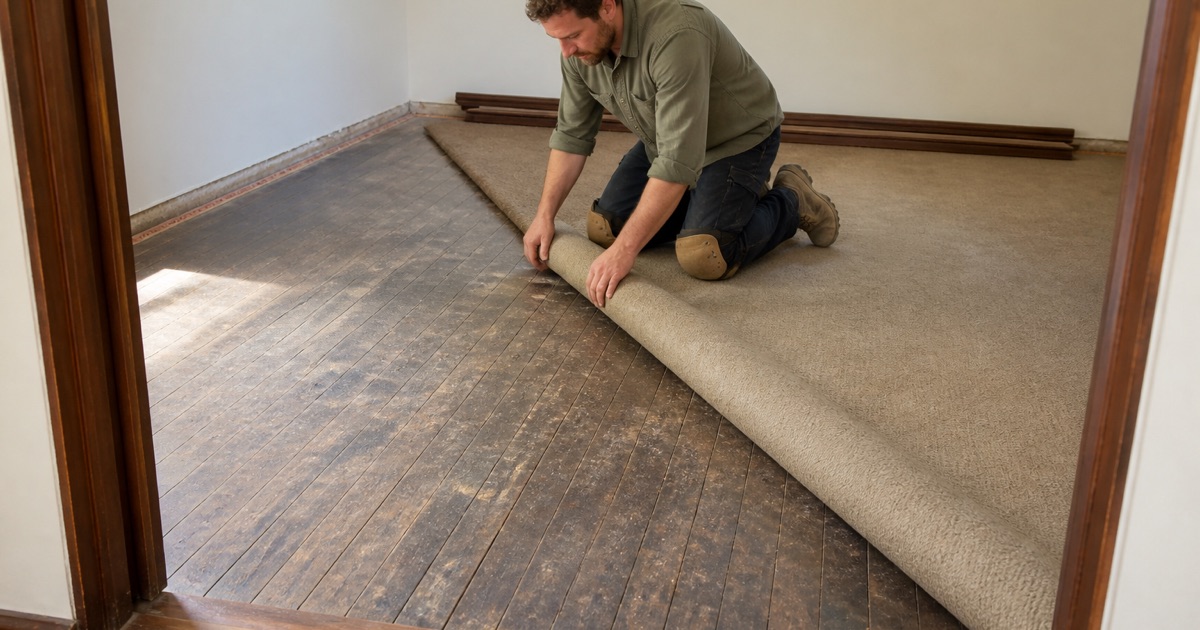
Carpet and padding pulled back in a Huntington Park bungalow to reveal original narrow strip oak underneath, with tack strip and staples still along the wall line.

Finding the Oak Under Your Carpet

Most pre-war houses here were built with hardwood and carpeted decades later. We lift a corner in an inconspicuous spot, usually a closet, and check what is under the padding before anything is committed. That five-minute check is the difference between budgeting for a refinish and budgeting for a new floor.

What Was Laid in Pre-1939 Los Angeles Houses

Houses of this era generally received solid oak in narrow strips, sometimes with a Douglas fir subfloor beneath it, and occasionally fir as the finish floor itself. Knowing which of those you have changes the sanding approach completely, because fir is far softer than oak and will not take the same aggressive first cut.

Narrow Strip Oak and Its Thinner Boards

Strip oak from this period is typically narrower and thinner than anything sold today, which means less wood above the tongue to work with. We identify board width and nominal thickness before quoting, since a floor with limited material left needs a gentler sequence than a modern 3/4 inch solid floor.

Judging Whether a Floor Can Still Be Sanded

A floor that has already been refinished two or three times may have very little left. We look at the exposed edge at a threshold or a floor register, check how close the fastener heads are to the surface, and give a straight answer about whether another full sand is available to you.

Measuring Wear Layer Above the Tongue

The usable wood is what sits above the tongue, not the full thickness of the board. Measuring it at a doorway or a cut edge is the only reliable way to know how many sandings remain. That measurement goes in the written scope, so the decision to sand or not is based on a number rather than an impression.

Stripping a Painted Hardwood Floor

Painted floors turn up regularly in this housing, sometimes under carpet as well. Paint on a pre-1978 floor is treated as lead-bearing until established otherwise, which means containment and lead-safe practices from the first pass. That adds time to the job, and we say so before starting rather than after.

Tar Paper, Mastic and Staple Removal

Carpet, linoleum and tile all leave something behind: rosin or tar paper, black cutback mastic, and thousands of staples. Every staple has to come out by hand before a drum sander touches the floor, because one missed fastener will tear an abrasive belt and score the boards.

Matching Boards Nobody Has Milled Since the 1940s

Replacement stock for a period floor rarely matches off the shelf, since board width and milling profiles have moved. We source reclaimed material or have boards milled to the original profile, then blend the repair into the surrounding field so the join reads as floor rather than as patch.

Lead-Safe Sanding in Pre-1978 Housing

The EPA Renovation, Repair and Painting rule applies to housing built before 1978, and sanding is exactly the kind of paint disturbance it covers. Containment, controlled dust collection and proper cleanup are part of the job on this housing stock, which is most of what stands in Huntington Park.

When a Floor Is Genuinely Past Saving

Sometimes there is not enough wood left, or water and rot have taken too many boards. We say so plainly and price the alternative rather than taking on a refinish that will look poor and fail early. An honest answer at the quote stage costs less than a floor that has to be done twice.

Sanding, Refinishing and Living Through It

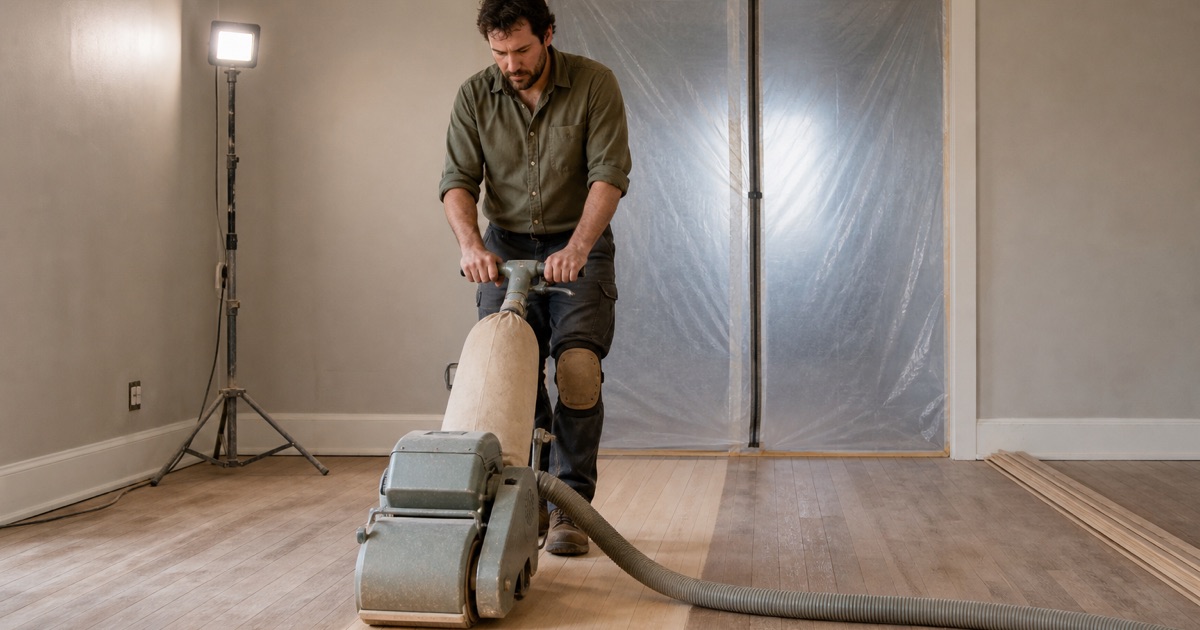
Installer running a drum sander across white oak strip flooring in an occupied Huntington Park house, with plastic sheeting sealing the doorway behind him.

The 36, 50 and 80 Grit Sequence

A full sand runs through a sequence, commonly 36 then 50 then 80 grit, with each pass removing the scratch pattern left by the one before. Skipping a grit to save an hour leaves deeper scratches that the finish then magnifies, and those show up under daylight rather than under work lights.

Screen and Recoat Against a Full Sand

If the finish is worn but the wood underneath is not damaged, a screen and recoat abrades the existing surface and adds a fresh coat without removing wood. It is faster, cheaper and leaves the floor thicker. We recommend it wherever the floor genuinely qualifies, because it preserves sandings for later.

Dust Containment at the Sander

Dust is collected at the machine rather than chased afterwards, with containment at doorways and controlled airflow. Nothing captures every particle, and any contractor claiming otherwise is overselling it. What good containment does deliver is a house that stays livable and a neighboring unit that is not coated.

How Long a Refinish Keeps You Off the Floor

Timing depends on the finish system, not on the size of the room. Waterborne products allow foot traffic soonest, oil-modified takes longer, and every system needs longer again before rugs and heavy furniture return. We give the actual schedule for the product going down, coat by coat, in writing.

Waterborne, Oil-Modified and Hardwax Oil

Waterborne finishes dry fast and stay clear, oil-modified polyurethane ambers over time and is very durable, and hardwax oil sits in the wood and can be spot-repaired without recoating a whole room. Each suits a different situation, and the right one depends on traffic, timeline and how the floor will be maintained.

The South Coast air district caps wood coatings at 275 grams per liter, and that limit binds the contractor applying the product, not only the manufacturer selling it. We specify from products that comply, so there is no discovery midway through a job that the intended finish cannot legally be used here.

Choosing a Sheen You Can Live With

Sheen changes how much a floor shows. Higher gloss reflects more light and reveals every fleck of dust, footprint and minor scratch, while satin and matte hide more and read as more contemporary. In rooms with strong daylight the difference is dramatic, so we look at samples in the actual room.

Refinishing Room by Room While You Stay

Most refinishing jobs can be phased so the household keeps part of the house throughout, with sealed-off work areas and a sequence agreed in advance. It takes longer overall than emptying the place, but for an occupied house or an occupied building it is usually the difference between doable and not.

Cure Time Against Dry Time

Dry means the surface is no longer tacky. Cured means the finish has reached full hardness, which takes considerably longer. Putting rugs down or sliding furniture across a floor that is dry but not cured is the most common way a brand new finish gets damaged in its first month.

Edges, Corners and Closets

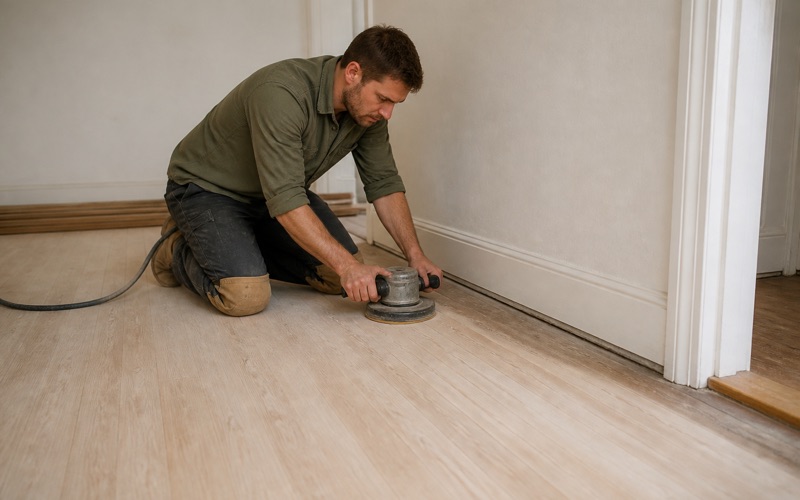
A drum sander cannot reach the perimeter, so edges, corners, closets and stair landings are worked with an edger and by hand. Blending that perimeter into the field is the part of the job that separates a good refinish from an obvious one, and it is where the time goes.

Floors in Rentals, Duplexes and Small Apartment Buildings

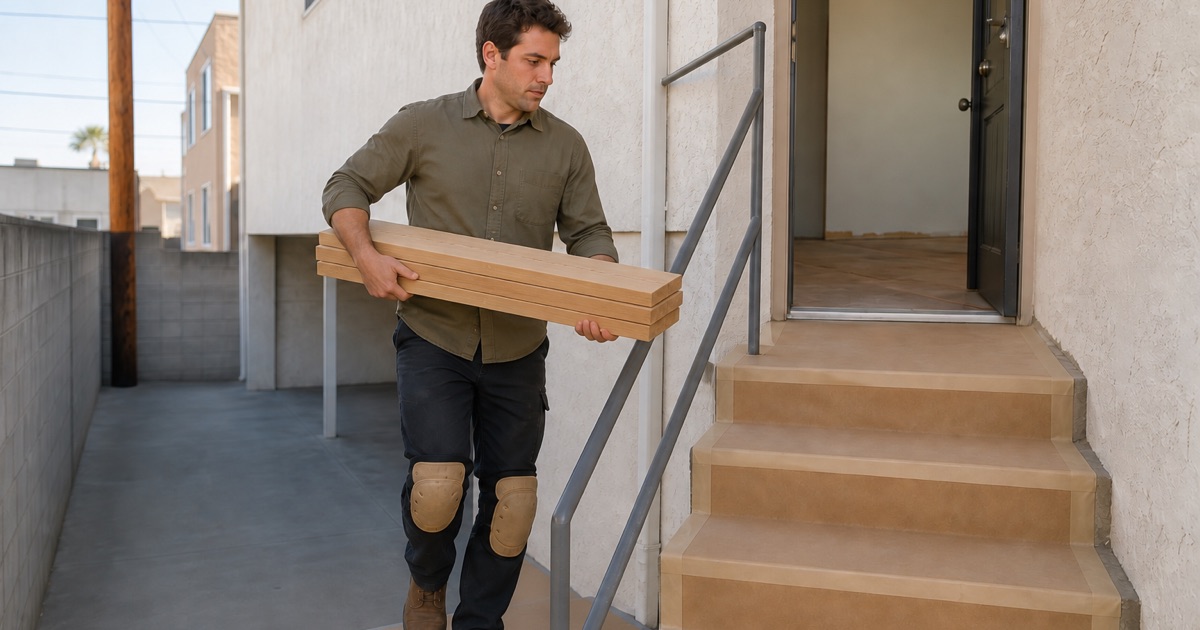
Installer carrying oak flooring up the shared exterior stair of a Huntington Park stucco apartment building, the treads protected with board underfoot.

Turning a Unit Over Without Losing a Month

Vacancy is the real cost of a turnover, not the flooring. We schedule against your move-out and move-in dates, pick finish systems by how fast they return to service, and sequence the work so the unit is genuinely ready on the date agreed rather than a week after it.

What a Rental Floor Has to Survive

A rented floor takes furniture dragged across it, tenants who are not thinking about it, and years between refinishes. That points toward harder species, more durable finish systems and details that tolerate neglect. Specifying a delicate finish for a rental is a decision that gets paid for at the next turnover.

Costing a Floor Per Unit

A building of eight units does not cost eight times one unit. Mobilization, containment setup and machine time all spread across the job, and material bought for a whole building prices differently. We quote per unit and for the building together, so the saving from doing several at once is visible.

Refinishing One Unit With Neighbors in Place

Work in one unit while the rest stay occupied means containment at the unit door, dust collection at the machine, and honest scheduling of the noisy passes. Neighbors need to know when sanding happens. Getting that communication right prevents most of the complaints that arise from work in an occupied building.

Wood or Engineered in a Rental

Solid wood can be refinished repeatedly and lasts indefinitely if it is maintained. Engineered is more stable over concrete and often costs less initially, but its wear layer limits how many times it can be sanded. For a long-held rental, refinishable material usually wins on total cost rather than on price.

Repairing Rather Than Replacing at Turnover

Most turnover floor damage is localized: a water-stained section by a window, boards damaged under an appliance, a patch of pet damage. Replacing those boards and recoating the room costs a fraction of a new floor and keeps the original material, which on an old building is often better than what replaces it.

Noise Between an Upstairs Unit and the One Below

Hard flooring upstairs transmits impact noise to the unit below, and that is the most common complaint after a floor goes into a multifamily building. Acoustic underlayment and floating assemblies reduce it. We raise this before installation rather than after the downstairs tenant complains.

Where Sound Requirements Actually Come From

Sound requirements for a specific building come from that building’s own governing documents and the code as adopted locally, not from a number circulated online. We ask to see what actually applies to your building and specify to it, rather than quoting a figure that may not govern anything.

Scheduling Around Occupied Units

Shared entrances, stairs and hallways are the pinch point in a small building. Protecting them, keeping them usable, and timing material deliveries so they do not block access is part of the plan for any occupied building, and it is agreed before the first machine arrives rather than improvised.

Documenting Floor Condition at Move-In

Photographs and a written note of floor condition at move-in and move-out settle most disputes about damage before they start. We provide a written condition record with any turnover work, which gives the owner something concrete rather than a recollection when a deposit is in question.

New Floors, Subfloors and Moisture

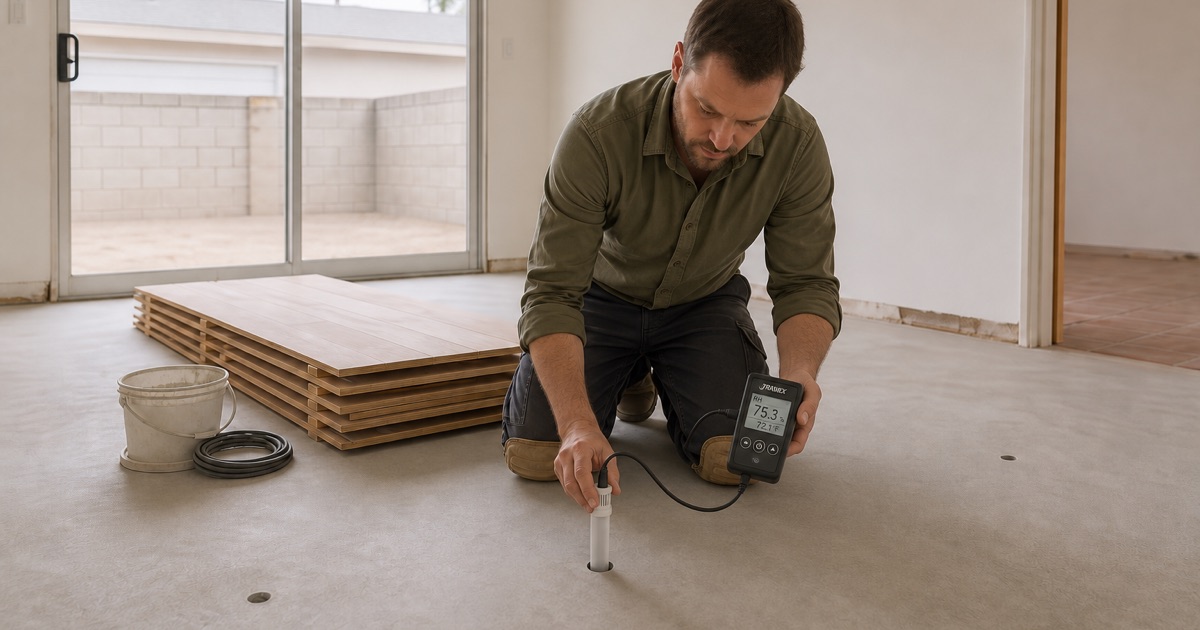
Installer setting a relative humidity probe into a drilled hole in a Huntington Park concrete slab before any flooring goes down.

Telling a Slab House From a Raised Foundation

Slab and raised construction accept different floors, and the difference is not always obvious from inside. Floor registers, a crawl space access hatch, the height of the floor above grade and the sound underfoot all indicate it. We establish this on the first visit, because it governs every product decision after.

Testing a Slab With In-Situ RH Probes

Concrete holds moisture long after it looks and feels dry. In-situ relative humidity probes drilled into the slab to the ASTM F2170 method give a reading from inside the concrete rather than off its surface. A slab reading above 75% relative humidity is not ready, whatever the schedule says.

Solid Wood Over a Slab

Solid hardwood over concrete is possible but conditional: it needs a proven-dry slab, an appropriate vapor retarder, and usually a plywood subfloor or a sleeper system to fasten into. Where those conditions cannot be met, we say engineered is the better answer rather than installing solid and hoping.

Where Engineered Hardwood Is the Right Answer

Engineered flooring is a genuine engineering solution over concrete and in humidity-variable conditions, not merely a cheaper substitute. Its layered core is far more dimensionally stable than solid wood. What matters when specifying it is wear layer thickness, since that determines whether it can ever be sanded.

Nail-Down, Glue-Down and Floating Compared

Nail-down suits a wood subfloor and gives the most solid feel underfoot. Glue-down works over concrete and transmits less sound. Floating installs fastest and tolerates minor substrate movement, but feels different to walk on. The subfloor usually decides which of the three is available before preference enters into it.

Joists and Crawl Space Work Found Underneath

Once an old floor comes up, what is underneath becomes visible: cracked joists, previous repairs, missing ground cover, moisture. We inspect and report before the new floor goes down, because these are far cheaper to correct while the subfloor is open than after a finished floor is over them.

Squeaks That Come From the Structure

A squeak is usually movement between the subfloor and a joist rather than anything in the finish floor. Where there is crawl space access, that is often fixable from below without disturbing the floor at all. Diagnosing which layer is moving comes first, otherwise the repair addresses the wrong thing.

Acclimating Wood Before It Is Fastened

Flooring is delivered and left in the house to reach equilibrium with the conditions it will live in. Fastening wood down before it has acclimated is what produces gaps in winter and cupping in summer. We measure moisture content rather than counting days, since the number is what matters.

Expansion Gaps and Floors Built Without Them

Wood moves seasonally, so a floor needs a gap at every wall and fixed obstruction, hidden under baseboard and shoe molding. Floors installed tight to the wall have nowhere to go and buckle. It is invisible when done right and expensive to correct once the floor has lifted.

Stairs, Thresholds and Where the Floor Ends

The edges are where a floor is judged. Stair treads and nosings, thresholds at doorways, reducers where the floor meets tile, and transitions between rooms all need detailing rather than an off-the-shelf strip. We plan these at the quote stage so the finished floor looks resolved at every edge.

Areas We Serve

Huntington Park Wood Flooring provides wood flooring throughout the greater Huntington Park area, with the same crews and the same standards on every job.

Good to know

Frequently Asked Questions

How much does refinishing a wood floor cost in Huntington Park?

Cost depends on square footage, the condition of the existing floor, whether staining is involved and which finish system is specified. A floor needing board repairs or staple and mastic removal takes more labor than a straightforward sand and coat. We measure the floor and give a written price rather than quoting a rate per square foot over the phone.

Can my original 1920s floor be refinished, or does it need replacing?

That depends on how much wood remains above the tongue and how many times it has already been sanded. We measure at a threshold or cut edge and give a direct answer. Many pre-war floors in this area have at least one more sanding available, and some have none, so it is worth checking before assuming either.

How long will the work take, and can we stay in the house?

Most refinishing jobs can be phased room by room so the household stays in place, which takes longer overall than emptying the house but avoids moving out. Timing depends on the finish system and how many coats are involved. We give the full schedule, including when furniture can return, before starting.

Do you work on rental properties and apartment buildings?

Yes, and a large share of our work is exactly that. We quote per unit and for a building as a whole, schedule against turnover dates, and set up containment so units next door stay usable while work is going on. Written condition records are provided with turnover work.

Is there a wood floor under my carpet?

Very often in this area, given how much of the housing predates 1950. We check by lifting a corner in a closet or another inconspicuous spot before anything is committed, which tells us the species, the board width and the rough condition. That check costs nothing and changes the budget substantially.

What is the difference between solid and engineered hardwood?

Solid is a single piece of wood that can be sanded many times over its life. Engineered has a real wood wear layer over a stable core, which handles concrete and humidity swings far better. The choice is usually decided by the subfloor rather than by preference, and wear layer thickness is what matters when comparing engineered products.

Do you handle water-damaged floors?

Yes. The first step is establishing how far the water travelled and getting the structure genuinely dry, since sanding or refinishing a wet floor guarantees failure. Some cupped floors flatten out as they dry and need only a recoat; others need boards replaced. We assess before committing to either.

What about dust?

Dust is collected at the machine and contained at doorways with controlled airflow. No system captures everything, and we will not claim otherwise, but proper containment keeps a house livable during the work and keeps an adjoining unit from being coated in a multifamily building.

Which finishes can you actually use in Los Angeles?

Wood coatings applied here are limited to 275 grams per liter of volatile organic compounds by the South Coast air district, and that limit binds the contractor applying the product. Plenty of good waterborne, oil-modified and hardwax oil products comply. We specify from those, so nothing has to change midway through a job.

Ready to Get Started?

Request a free quote today and we'll get back to you fast.